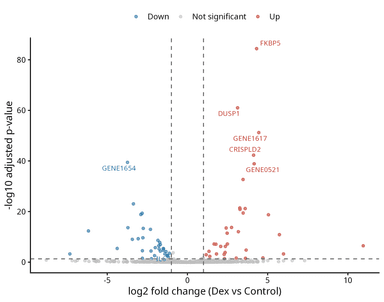
GEO has thousands of published RNA-seq datasets — including the one from that paper you just read. This post shows you how to pull any GEO dataset into R with GEOquery, extract the count matrix and sample metadata, and save both as CSVs for downstream analysis.
BioTech Bench
Where Wet Lab Meets Dry Lab — Tools, Tutorials & Reviews for Modern Biologists
- A guide RNA score is only useful if you know what it measures. This post covers the sequence rules that determine Cas9 guide efficiency, how on-target scoring algorithms work and what they were trained on, off-target risk metrics, how to read CRISPOR output, and what changes when designing for Cas12a.
- Six steps from raw CSV to a publication-ready figure with significance bars. A complete, copy-paste-ready R workflow using dplyr, ggplot2, and ggsignif — built on the qPCR dataset from Arc 1.
- Prime editing writes any small edit directly into your genome — transversions, insertions, deletions — without cutting both DNA strands. This post covers the mechanism, PE2/PE3/PE7 variants, and when to choose prime editing over base editing or HDR.
- A practical guide to free tools for analyzing Sanger sequencing chromatograms — from .ab1 viewers to CLI variant callers.
Subscribe to the newsletter