BioTech Bench
HomeLearning PathsCategoriesResourcesShopAbout

Bioinformatics

Browse by topic
  • bioinformatics (35)
  • how-to (29)
  • r (21)
  • crispr (20)
  • r-series (19)
  • gene-editing (17)
  • crispr-series (15)
  • beginner (15)
  • tool-review (12)
  • rna-seq (11)
  • intermediate (10)
  • molecular-biology (7)
  • ai (4)
  • explainer (4)
  • free-tools (4)
  • learning (4)
  • sequencing (3)
  • protein-design (2)
  • trends (2)
  • ngs (2)
  • open-source (2)
  • python (2)
  • statistics (2)
  • pcr (2)
  • esm3 (1)
  • alphafold3 (1)
  • protein-structure (1)
  • bash (1)
  • command-line (1)
  • lab-software (1)
  • scientific-illustration (1)
  • conda (1)
  • synthetic-biology (1)
  • bioelectronics (1)
  • nanotechnology (1)
  • off-target (1)
  • reviewing (1)
  • bench-biologist (1)
  • nanopore (1)
  • pacbio (1)
  • cloning (1)
  • drug-discovery (1)
  • career (1)
  • biology (1)
All Posts
  • bioinformatics (35)
  • how-to (29)
  • r (21)
  • crispr (20)
  • r-series (19)
  • gene-editing (17)
  • crispr-series (15)
  • beginner (15)
  • tool-review (12)
  • rna-seq (11)
  • intermediate (10)
  • molecular-biology (7)
  • ai (4)
  • explainer (4)
  • free-tools (4)
  • learning (4)
  • sequencing (3)
  • protein-design (2)
  • trends (2)
  • ngs (2)
  • open-source (2)
  • python (2)
  • statistics (2)
  • pcr (2)
  • esm3 (1)
  • alphafold3 (1)
  • protein-structure (1)
  • bash (1)
  • command-line (1)
  • lab-software (1)
  • scientific-illustration (1)
  • conda (1)
  • synthetic-biology (1)
  • bioelectronics (1)
  • nanotechnology (1)
  • off-target (1)
  • reviewing (1)
  • bench-biologist (1)
  • nanopore (1)
  • pacbio (1)
  • cloning (1)
  • drug-discovery (1)
  • career (1)
  • biology (1)
  • Measuring CRISPR editing efficiency from start to finish: a complete protocol overview
    Published on
    November 15, 2026

    Measuring CRISPR editing efficiency from start to finish: a complete protocol overview

    crispr-seriescrisprgene-editingbioinformaticshow-to
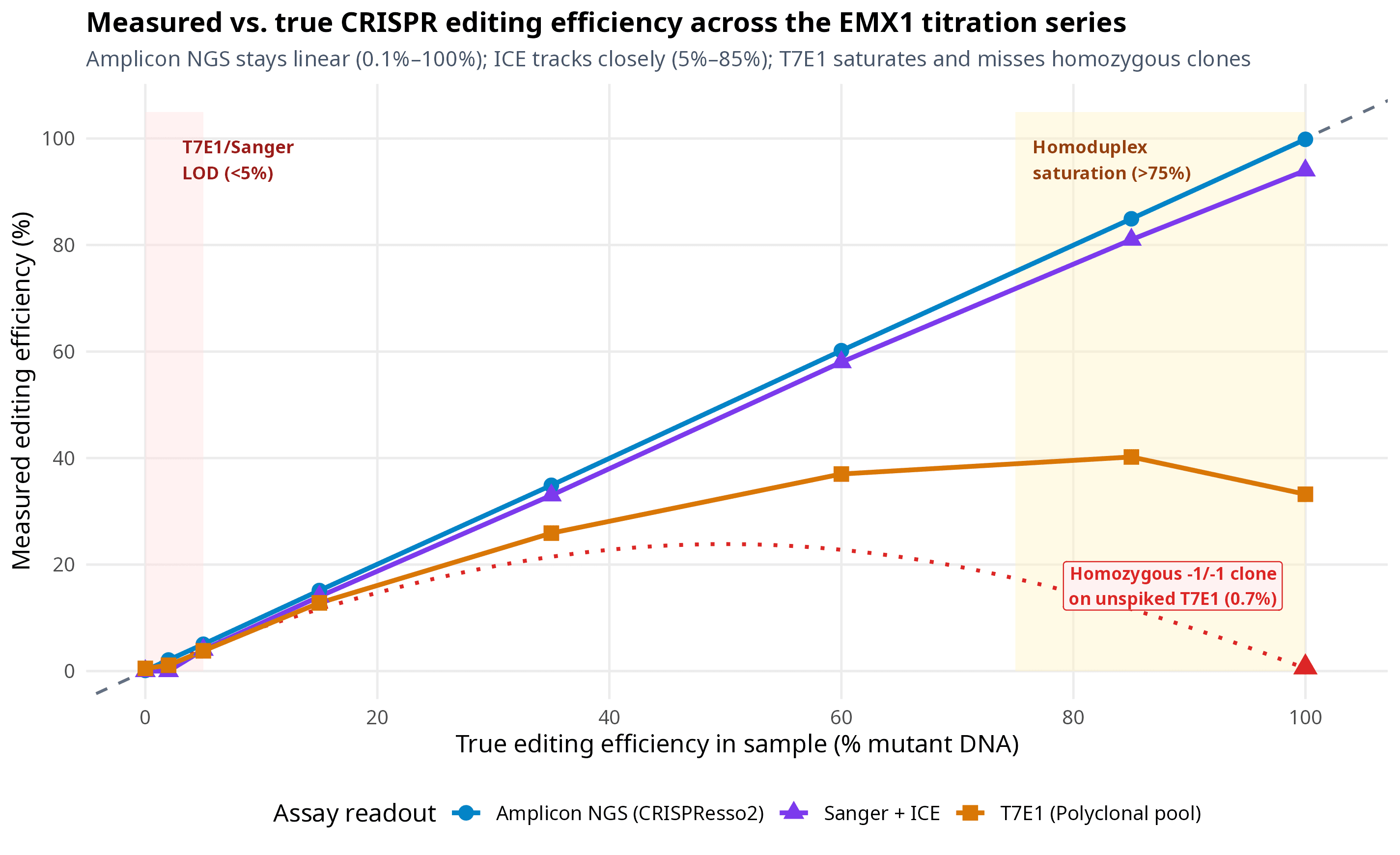
    Your T7E1 gel says 37% editing, your Sanger trace in ICE says 58%, and your single-cell clone looks completely unedited on the gel even though the protein is gone. Here is the end-to-end bench and analysis protocol for measuring CRISPR efficiency across knockouts, base edits, prime edits, and HDR knock-ins without getting fooled by your assay.
  • Your first single-cell RNA-seq analysis in R with Seurat
    Published on
    November 15, 2026

    Your first single-cell RNA-seq analysis in R with Seurat

    how-toRbioinformaticsr-seriesrna-seq
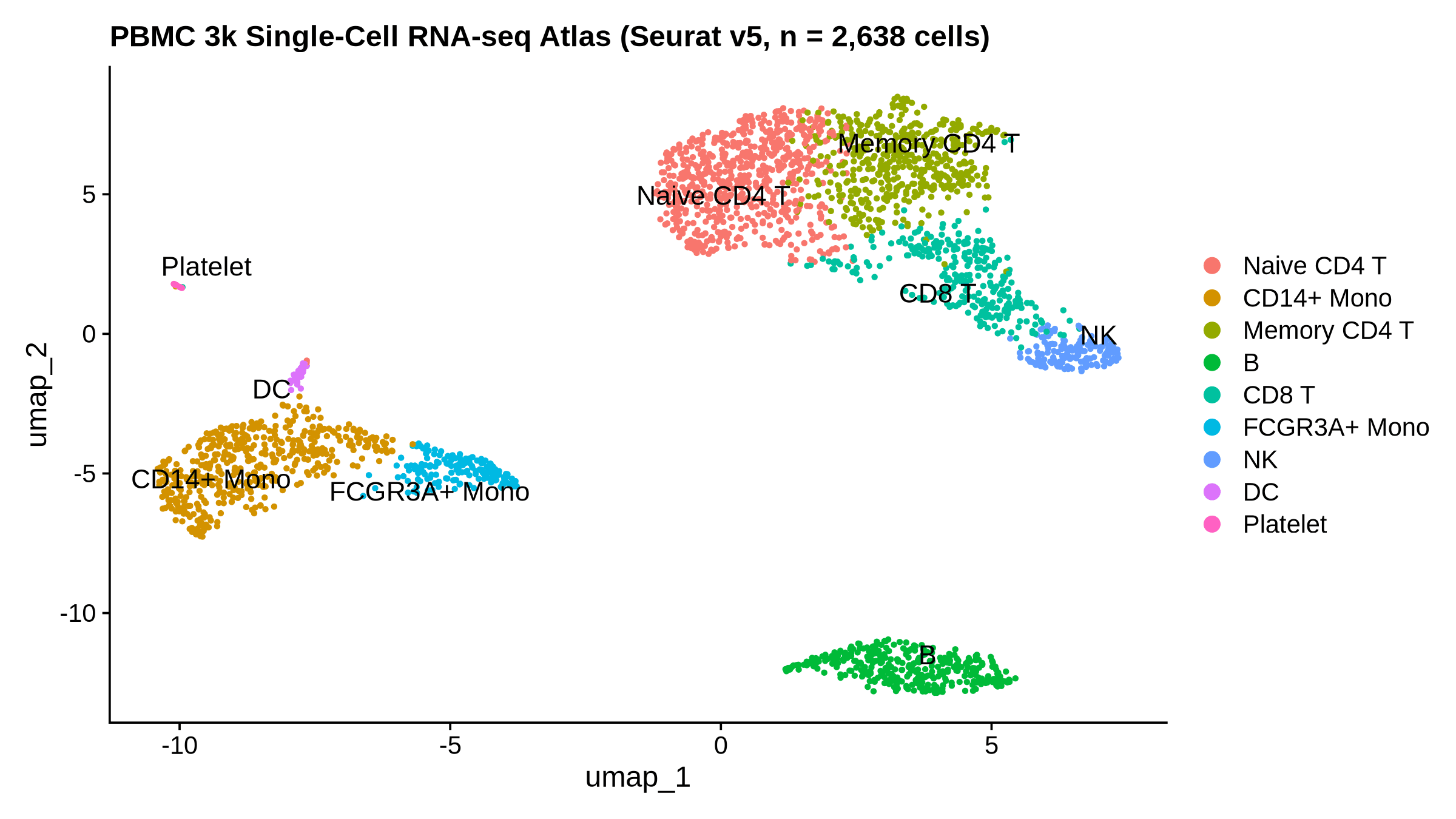
    Cell Ranger just handed you three files — matrix.mtx, genes.tsv, and barcodes.tsv — and a matrix that is 93% zeros. Here is how to take a real 10x Genomics dataset from raw UMI counts to an annotated UMAP of human immune cell types in R with Seurat v5.
  • CRISPResso2: the standard tool for CRISPR NGS analysis (full tutorial)
    Published on
    November 10, 2026

    CRISPResso2: the standard tool for CRISPR NGS analysis (full tutorial)

    crispr-seriescrisprgene-editingbioinformaticshow-to
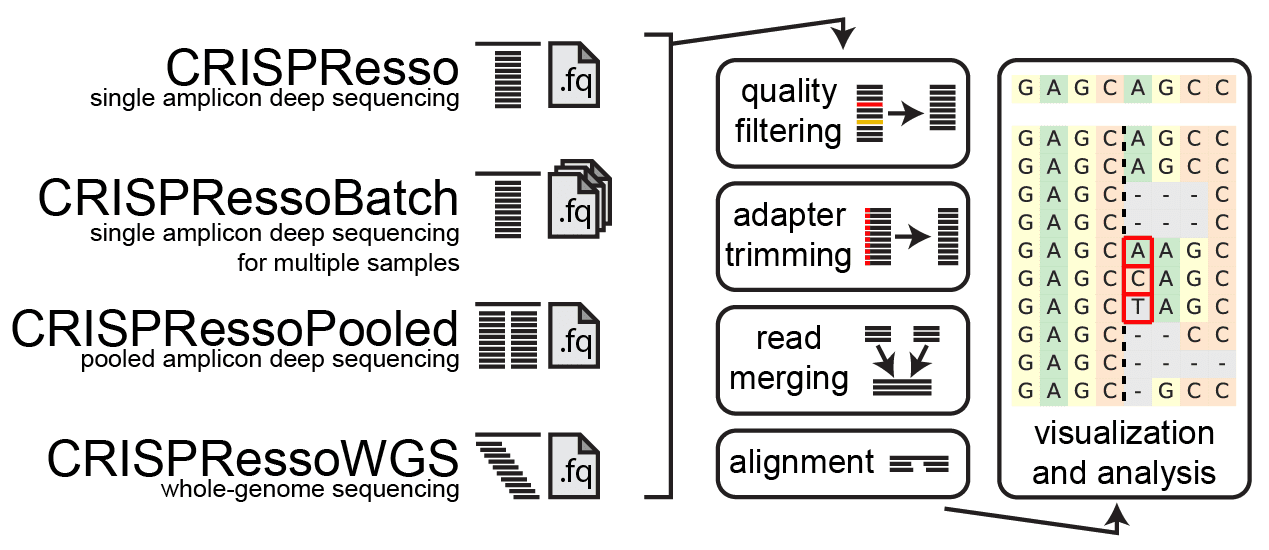
    Your amplicon FASTQ files are back from the sequencer, and the default CRISPResso2 numbers are already lying to you about your HDR and base editing rates. Here is how to run CRISPResso2 properly from raw paired-end reads to publication-ready allele tables.
  • Volcano plots and MA plots: visualizing RNA-seq results in R
    Published on
    July 30, 2026

    Volcano plots and MA plots: visualizing RNA-seq results in R

    how-toRbioinformaticsr-seriesrna-seq
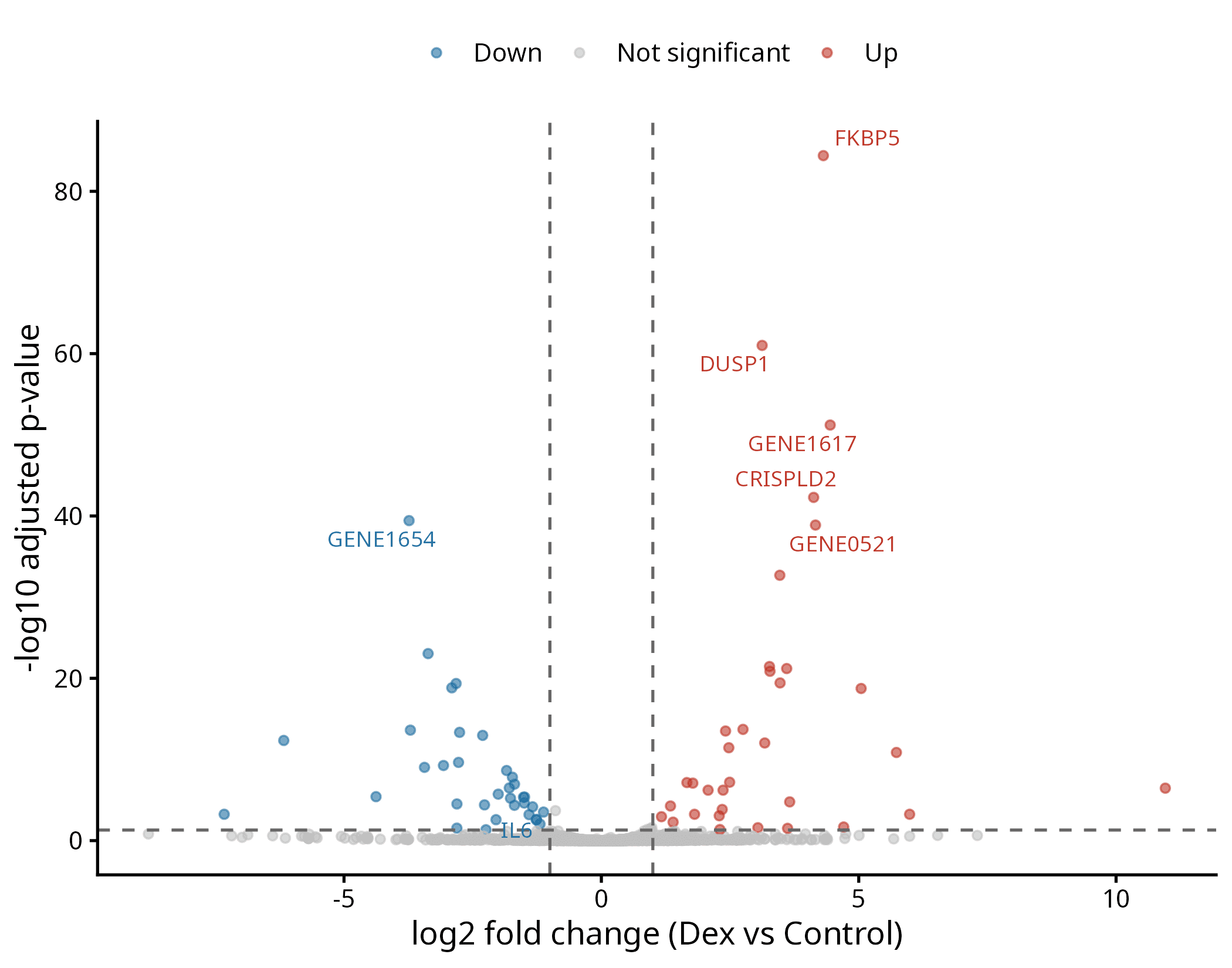
    Your DESeq2 results table has thousands of rows, and sorting it in Excel tells you almost nothing about your experiment. Here is how to build volcano plots and MA plots in R with ggplot2 — and how to read what they are actually telling you.
  • Long-read sequencing for CRISPR validation: when short reads miss the big picture
    Published on
    July 1, 2026

    Long-read sequencing for CRISPR validation: when short reads miss the big picture

    crisprsequencingnanoporepacbiongsbioinformatics
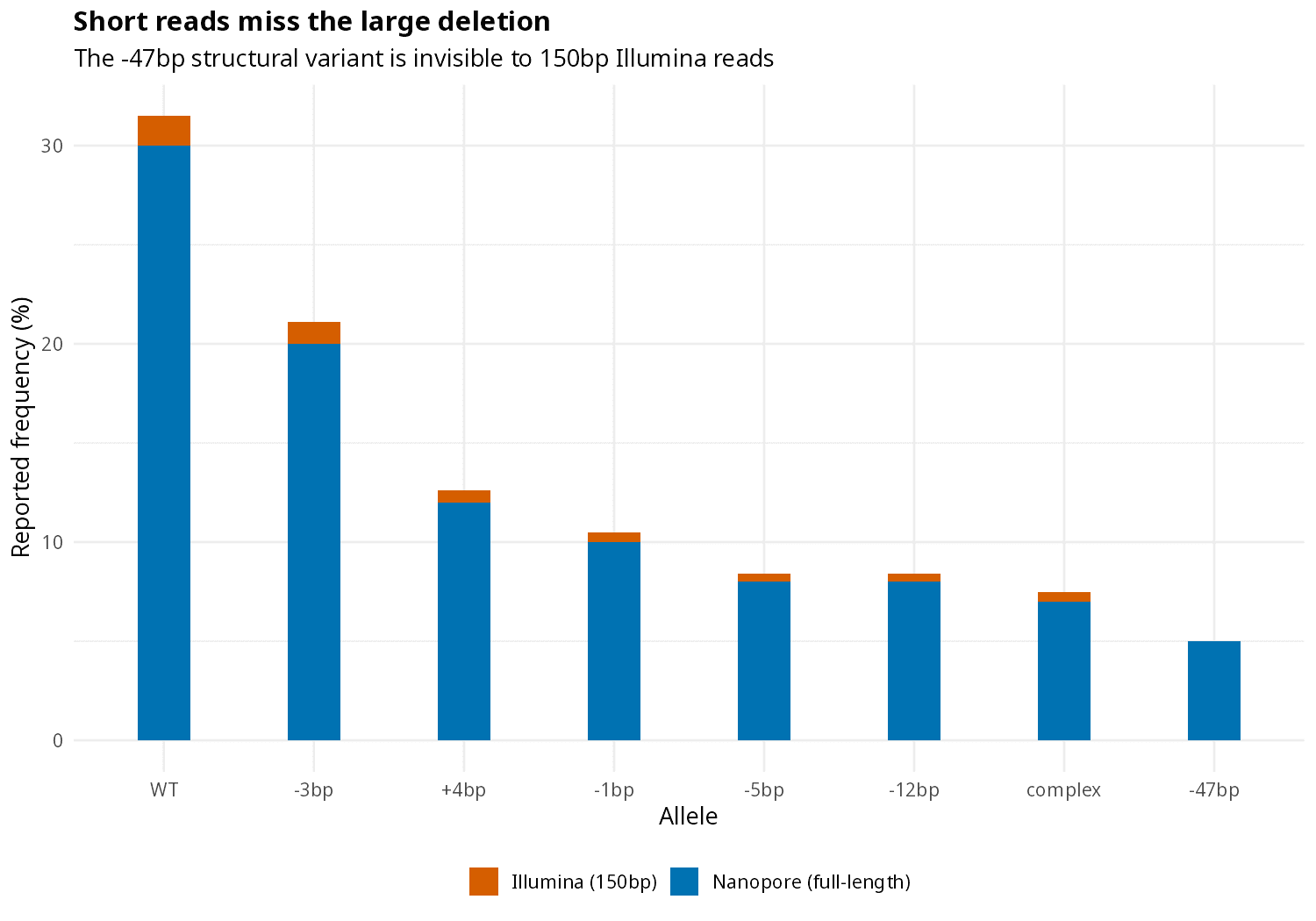
    Short-read amplicon NGS is the gold standard for CRISPR indel detection — but it has a blind spot for structural variants, large deletions, and complex rearrangements. Long-read sequencing from Oxford Nanopore or PacBio fills that gap. Here is when it matters and how to actually run the analysis.
1 of 7Next
mailMail
Support us on Ko-fi
BioTech Bench
•
© 2026
About & Editorial Standards·Resources·Sponsor·Privacy Policy
Made with ❤️love and ☕