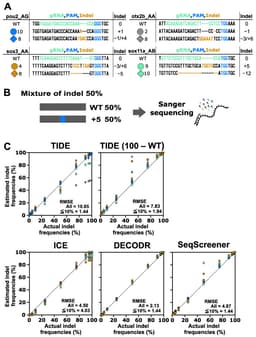
T7E1 tells you if CRISPR worked. TIDE and ICE tell you how well. This post explains how both tools deconvolve your Sanger sequencing trace into a real editing percentage — no NGS required.
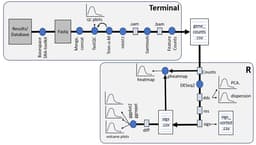
Before you run DESeq2, you need to understand what those numbers in your count matrix actually represent. This post explains what RNA-seq count data is, why raw counts are misleading, and exactly what format DESeq2 expects.
Mismatch-cleavage assays are the quickest and cheapest way to see if your CRISPR edit actually worked. This guide breaks down the mechanism of T7E1 and Surveyor nucleases, why the "denature and re-anneal" step is critical, and how to turn gel bands into an editing percentage.
If R is a smart phone, Bioconductor is the App Store for biology. This post explains why bioinformatics has its own package repository, why it’s better than CRAN for scientists, and how to keep your biological analysis reproducible.
GEO has thousands of published RNA-seq datasets — including the one from that paper you just read. This post shows you how to pull any GEO dataset into R with GEOquery, extract the count matrix and sample metadata, and save both as CSVs for downstream analysis.