T7E1 tells you if CRISPR worked. TIDE and ICE tell you how well. This post explains how both tools deconvolve your Sanger sequencing trace into a real editing percentage — no NGS required.
Mismatch-cleavage assays are the quickest and cheapest way to see if your CRISPR edit actually worked. This guide breaks down the mechanism of T7E1 and Surveyor nucleases, why the "denature and re-anneal" step is critical, and how to turn gel bands into an editing percentage.
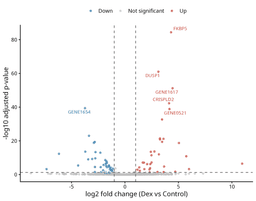
We’ve covered downloading data, normalization, and visualization. Now, we put it all together. This capstone post walks through a complete end-to-end analysis of a public breast cancer dataset (GSE183947) — from raw GEO download to identifying differentially expressed genes and creating a publication-ready volcano plot.
You have a gene to edit. Should you use Cas9, Cas12a, or a Base Editor? This capstone post walks you through the entire workflow—from choosing the right molecular "scissors" for your target to designing and validating your final guides.
If you test 20,000 genes at once, you’ll get 1,000 "significant" results by chance alone. This post explains the Multiple Testing Problem and how to use the p.adjust() function in R to calculate False Discovery Rates (FDR) and protect your results.