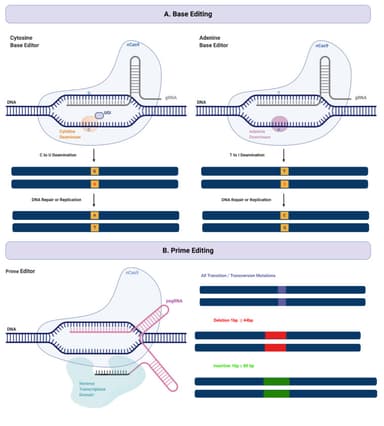
Prime editing writes any small edit directly into your genome — transversions, insertions, deletions — without cutting both DNA strands. This post covers the mechanism, PE2/PE3/PE7 variants, and when to choose prime editing over base editing or HDR.
BioTech Bench
Where Wet Lab Meets Dry Lab — Tools, Tutorials & Reviews for Modern Biologists
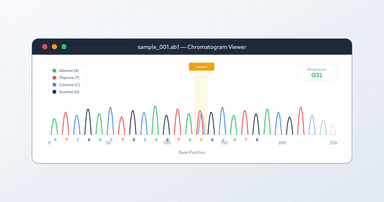
- A practical guide to free tools for analyzing Sanger sequencing chromatograms — from .ab1 viewers to CLI variant callers.
- t.test() and aov() replace ten minutes of clicking in GraphPad Prism. Here is how to run t-tests, ANOVA, and post-hoc comparisons on your qPCR data — with code you can actually reproduce.
- Base editing converts a single nucleotide directly — no double-strand break, no donor template — with efficiencies that routinely outperform HDR in primary and non-dividing cells. This post covers how CBE and ABE work, the editing window, bystander edits, and when to choose base editing over Cas9+HDR or prime editing.
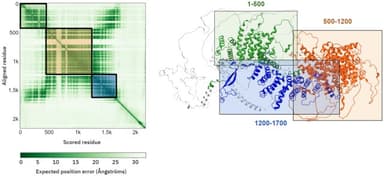
- AlphaFold3 can predict your protein's 3D structure from a sequence in minutes — for free. Here's how it works, how to use the server, and what those confidence scores actually mean.
Subscribe to the newsletter