t.test() and aov() replace ten minutes of clicking in GraphPad Prism. Here is how to run t-tests, ANOVA, and post-hoc comparisons on your qPCR data — with code you can actually reproduce.
ggplot2 turns your summarized qPCR data into publication-ready figures in a dozen lines of code. Here is how to build dot plots, bar charts, and multi-panel figures — and export them at 300 dpi without touching GraphPad.
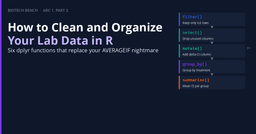
dplyr turns data wrangling from a click-and-copy nightmare into five readable lines of code. Here is how to filter, summarize, and reshape your qPCR data without touching Excel.
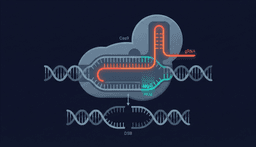
Before you design your first CRISPR experiment, you need to understand what Cas9 is actually doing to your DNA — and what happens after the cut. This post covers the mechanism, PAM sites, and why repair pathway choice determines your experimental outcome.
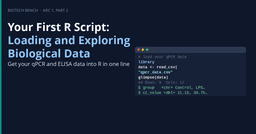
You installed R, opened it, and... now what? Here's how to actually load your lab data and start making sense of it — no prior coding experience needed.