pegRNA design has five parameters that each affect prime editing efficiency. Here are the principles behind PBS length, RT template, nick distance, and secondary structure — then how to apply them in PrimeDesign.
A guide RNA score is only useful if your target base lands in the editing window. This post covers how to count protospacer positions, use BE-Designer for CBE and ABE guide design, manage bystander edits, and handle PAM constraints — with worked examples for both editor types.
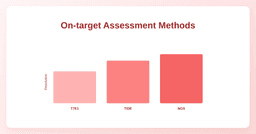
A guide RNA score is only useful if you know what it measures. This post covers the sequence rules that determine Cas9 guide efficiency, how on-target scoring algorithms work and what they were trained on, off-target risk metrics, how to read CRISPOR output, and what changes when designing for Cas12a.
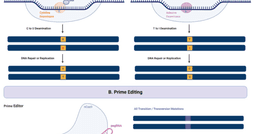
Prime editing writes any small edit directly into your genome — transversions, insertions, deletions — without cutting both DNA strands. This post covers the mechanism, PE2/PE3/PE7 variants, and when to choose prime editing over base editing or HDR.
Base editing converts a single nucleotide directly — no double-strand break, no donor template — with efficiencies that routinely outperform HDR in primary and non-dividing cells. This post covers how CBE and ABE work, the editing window, bystander edits, and when to choose base editing over Cas9+HDR or prime editing.