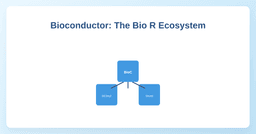
If R is a smart phone, Bioconductor is the App Store for biology. This post explains why bioinformatics has its own package repository, why it’s better than CRAN for scientists, and how to keep your biological analysis reproducible.
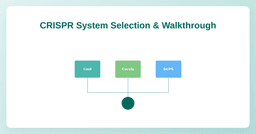
You have a gene to edit. Should you use Cas9, Cas12a, or a Base Editor? This capstone post walks you through the entire workflow—from choosing the right molecular "scissors" for your target to designing and validating your final guides.
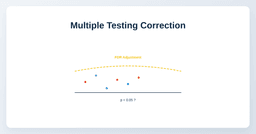
If you test 20,000 genes at once, you’ll get 1,000 "significant" results by chance alone. This post explains the Multiple Testing Problem and how to use the p.adjust() function in R to calculate False Discovery Rates (FDR) and protect your results.
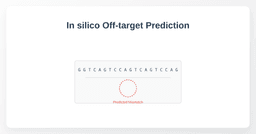
Choosing a guide RNA that cuts your target is only half the battle. You also need one that doesn’t cut anywhere else. This post breaks down the MIT and CFD scoring systems, how off-target algorithms actually work, and which tools are best for predicting Cas9 and Cas12a off-targets.
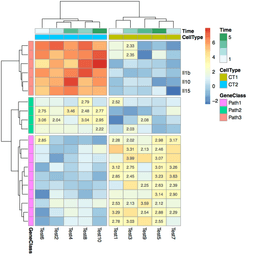
Raw log2 CPM values are hard to interpret as a table. A heatmap fixes that — but the defaults are ugly. Here is how to build a publication-ready gene expression heatmap in R with pheatmap, including clustering, color palettes, and sample annotations.