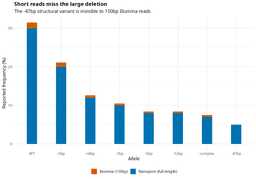
T7E1 tells you if CRISPR worked. TIDE and ICE tell you how well. This post explains how both tools deconvolve your Sanger sequencing trace into a real editing percentage — no NGS required.
Before you run DESeq2, you need to understand what those numbers in your count matrix actually represent. This post explains what RNA-seq count data is, why raw counts are misleading, and exactly what format DESeq2 expects.
Mismatch-cleavage assays are the quickest and cheapest way to see if your CRISPR edit actually worked. This guide breaks down the mechanism of T7E1 and Surveyor nucleases, why the "denature and re-anneal" step is critical, and how to turn gel bands into an editing percentage.
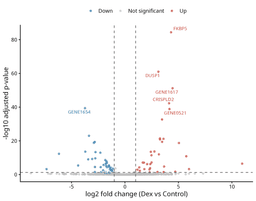
We’ve covered downloading data, normalization, and visualization. Now, we put it all together. This capstone post walks through a complete end-to-end analysis of a public breast cancer dataset (GSE183947) — from raw GEO download to identifying differentially expressed genes and creating a publication-ready volcano plot.
Bulk RNA-seq tells you the average gene expression of millions of cells at once. Single-cell RNA-seq tells you what every individual cell is doing. Here is how the technology works, how the data is analyzed, and how to know if you need it.